Foundation Leveling and Piers in Moberly, Missouri
Some foundation problems stay contained to one wall or one crack. Others involve the whole structure settling unevenly — one corner of the house sinking lower than the rest, a floor that noticeably slopes from one side of a room to the other, a chimney pulling slightly away from the house it's attached to. When a foundation is settling rather than just cracking, sealing a crack won't fix it. What it usually needs is leveling, and the tool for that job is piers.
What Piers Actually Do
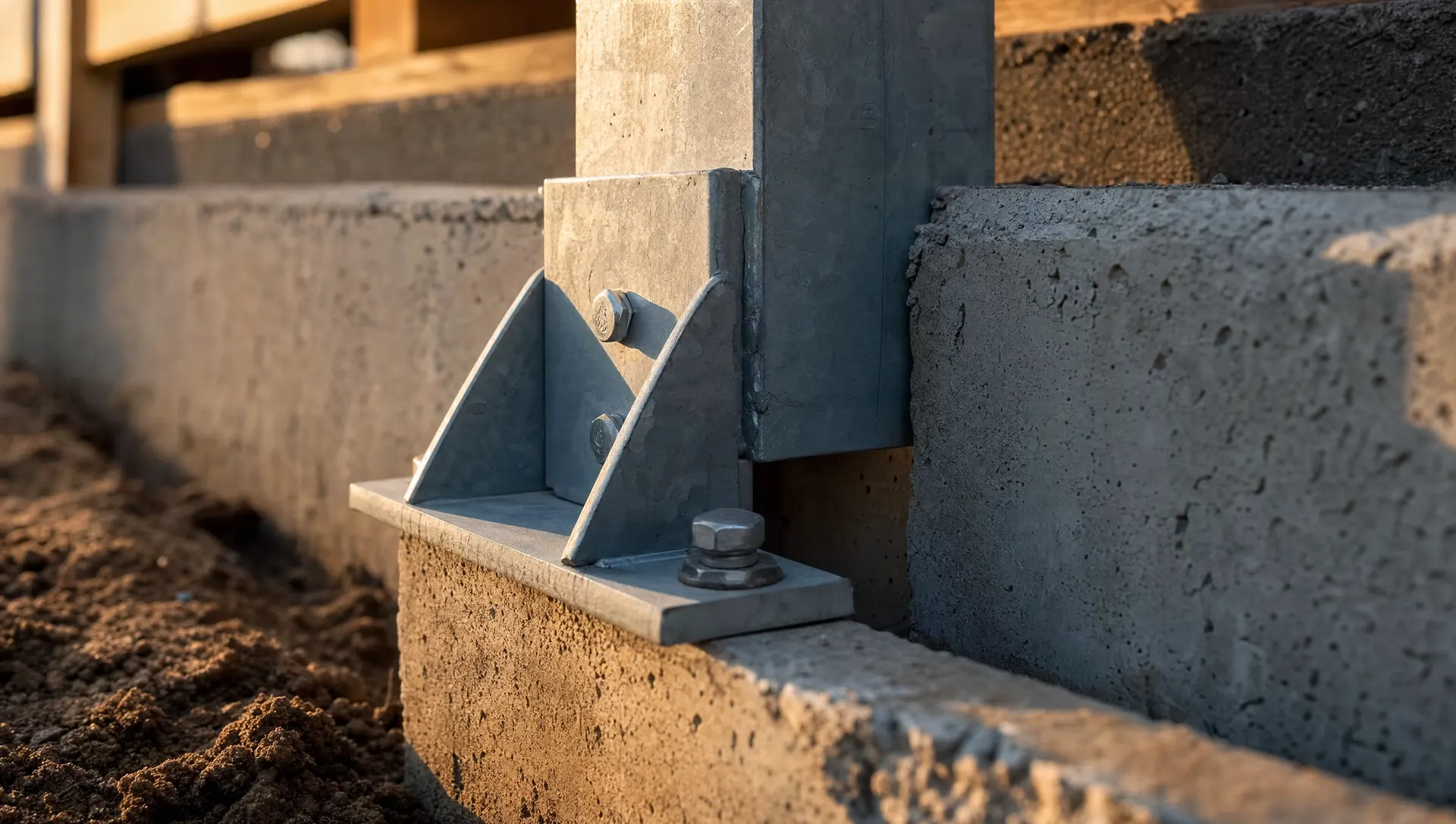
A pier is a steel post, sometimes called a push pier or helical pier depending on how it's installed, that gets driven or screwed down through the unstable soil near the surface until it reaches soil dense enough to actually bear the weight of the house. Once piers are in place under the foundation's footing, brackets connect the foundation to the piers, and hydraulic equipment can apply lifting force to raise the settled sections back toward level, within what the structure and the amount of settling will allow.
- Push piers are driven into the ground using the weight of the structure itself as resistance — generally used where the house is heavy enough to provide that resistance.
- Helical piers are screwed into the ground like a giant screw, useful on lighter structures or where push piers aren't a good fit, and can often be installed with less disturbance.
Both reach past the shifting topsoil that caused the settling in the first place and transfer the load to soil that isn't moving with the seasons.
How We Approach a Leveling Job
Leveling starts with figuring out where and how much a foundation has settled, usually by taking elevation measurements around the perimeter and comparing them room by room. That map shows which sections need piers, how many, and roughly how much lift is realistic — a foundation that's been settled for years doesn't always come back to perfectly level, and forcing it can crack finishes elsewhere in the house. From there, piers are installed at the calculated points, connected to the foundation, and used to stabilize and lift the structure as much as the situation reasonably allows. The goal is always a stable, supported foundation first, with as much leveling as can be safely achieved second.
Why Randolph County Foundations Settle Unevenly
Uneven settling almost always comes back to uneven soil conditions under the house. Clay soil doesn't dry out or absorb water at the same rate everywhere around a foundation — a corner shaded by a large tree stays wetter longer than a corner in full sun, a section near a downspout gets more water than the rest of the perimeter, and soil compaction from original construction is rarely perfectly even across the whole footprint. Over years of wet-spring, dry-summer cycles, those differences compound, and one part of the foundation settles more than another.
Homes built in Moberly's older neighborhoods during the railroad-era growth of the early 1900s add another factor: shallow foundations and less consistent soil preparation by today's standards, on top of a century or more of that same seasonal soil movement. Newer homes settle unevenly too, usually tied to how the site was graded and compacted before the foundation was poured.
Signs a Foundation Needs Leveling, Not Just Sealing
A few signs point toward settling rather than a simpler, contained repair:
- Floors that visibly slope, or where a round object rolls noticeably to one side
- Doors and windows racking out of square across multiple rooms, not just one
- Cracks appearing in multiple places, especially diagonal cracks radiating from door and window corners
- Gaps opening between exterior brick or siding and window or door trim
- A chimney separating slightly from the house
One crack in one spot is often a contained problem, covered on our foundation crack repair page. Movement showing up in several places throughout the house, especially in a pattern that gets worse toward one side or corner, usually points toward foundation settling that piers are built to address.
What Foundation Leveling Typically Costs
Pier installation is typically priced per pier, commonly somewhere in the $1,000 to $3,000 range each, and the total project cost depends heavily on how many piers the house needs — which in turn depends on the size of the home, how deep the piers have to go to reach stable soil, and how much of the perimeter is affected. A full underpinning job addressing significant settling across a house commonly runs from around $8,000 into the tens of thousands of dollars for larger or more severely affected homes. A localized leveling job addressing one corner or section costs meaningfully less than one addressing the whole foundation. The only way to get a real number is a professional assessment that maps out how much settling has occurred and how many piers it will realistically take.
Will piers make my floors perfectly level again?
Often they bring a foundation significantly closer to level, but "perfectly" isn't always realistic, especially in a home that's been settled for a long time. Finishes like drywall, tile, and trim can crack if a house is lifted too aggressively too fast. The realistic goal is usually stabilizing the foundation and achieving as much safe, gradual improvement in level as the structure allows, which we'll walk through as part of the assessment rather than promise a specific outcome upfront.
How many piers does a typical house need?
It varies enormously based on the size of the house, how much of the foundation is affected, and how deep the piers need to go to hit stable soil. A localized repair addressing one corner might need a handful of piers. A full perimeter job on a larger home with significant settling can need considerably more. This is one of the main things a professional assessment calculates before you get a number.
Is pier installation disruptive to the yard or the inside of the house?
There's some disturbance, yes — piers are installed from the exterior in most cases, which means digging access points around the foundation perimeter at the pier locations. It's more involved than crack injection but generally far less disruptive than a full excavation and wall rebuild. Landscaping right at the access points is typically affected; the rest of the yard usually isn't.
Get a Free Assessment
If your home has a sloping floor, doors that don't close right anymore, or a foundation that just looks off from the outside, tell us what you're noticing and we'll help you understand whether piers are the right fix.
Need Help in Moberly Right Now?
Tell us what you need and we'll get back to you fast with a free, no-pressure quote.